

Governance
Driven by our vision. Guided by our values.

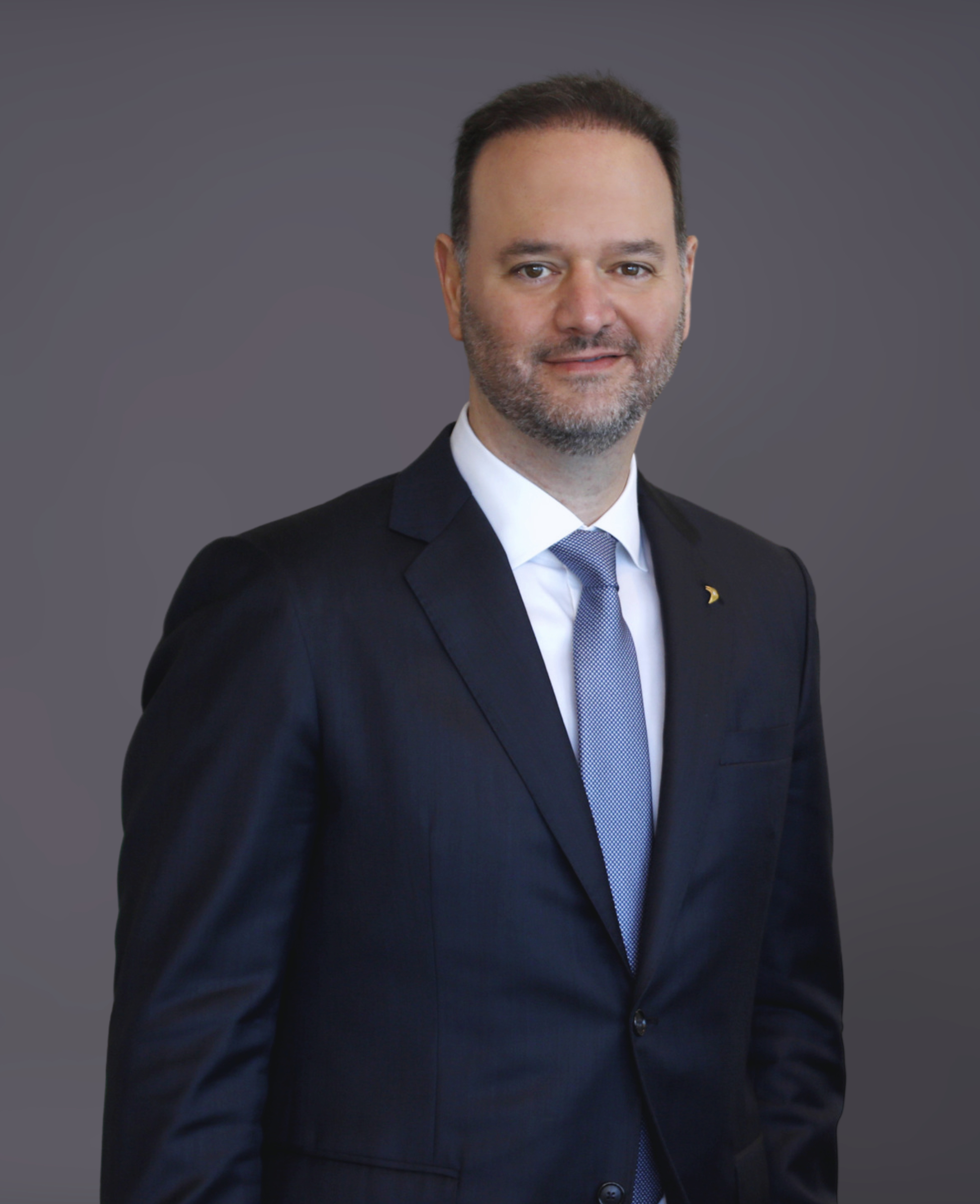

Board of Directors
The Board of Directors is comprised of ten members, as follows: three Directors elected by the holders of Class "A" common shares (central banks, banks and state-owned entities); five Directors elected by holders of Class "E" common shares (private investors); and two Directors elected by holders of all common shares.
Class A
JOSE ALBERTO GARZÓN
Audit Committee, Chairman
Nomination, Compensation and Operations Committee, Member
Anti-money Laundering, Compliance and Sustainability Committee, Member

JUAN ALBERTO PAZO
Audit Committee, Member
Nomination, Compensation and Operations Committee, Member
TARCIANA GOMES MEDEIROS
Audit Committee, Member
Nomination, Compensation and Operations Committee, Member
Class E
ANGÉLICA RUIZ CELIS
Audit Committee, Member
Nomination, Compensation and Operations Committee, Member

JULIANNE CANAVAGGIO
Audit Committee, Member
Risk Policy and Assessment Committee, Member
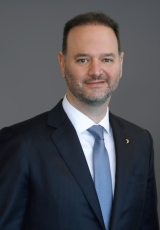
MIGUEL HERAS - CHAIRMAN
Risk Policy and Assessment Committee, Chairman
Finance and Business Committee, Member
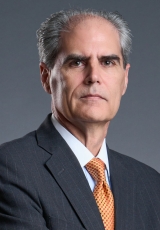
RICARDO MANUEL ARANGO
Anti-money Laundering, Compliance and Sustainability Committee, Chairman
Finance and Business Committee, Member
Risk Policy and Assessment Committee, Member
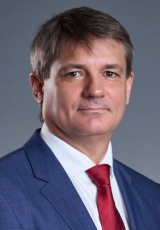
ROLAND HOLST
Finance and Business Committee, Chairman
Audit Committee, Member
Risk Policy and Assessment Committee, Member
All Classes

ALEXANDRA M. AGUIRRE
Finance and Business Committee, Member
Anti-money Laundering, Compliance and Sustainability Committee, Member
Risk Policy and Assessment Committee, Member
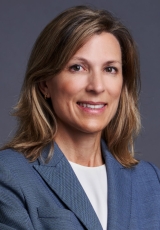
ISELA COSTANTINI
Nomination, Compensation and Operations Committee, Chairman
Audit Committee, Member
Board Committees
The Board of Directors has set up Committees in which the Board has delegated powers and duties, subject to the provisions of the Articles of Incorporation and the By-Laws.
Audit Committee
The Audit Committee (the “Committee”) of Bladex, Inc. (the “Bank”) is a standing committee of the Board of Directors. The Committee is responsible to discharge certain duties established by applicable regulations and to assist the Board of Directors in fulfilling its oversight responsibilities for the financial reporting process, the integrity of the Bank’s financial statements, the system of internal control over financial reporting, the audit process and the process for monitoring compliance with legal and regulatory requirements, and with the Code of Ethics.
Anti - Money Laundering, Compliance and Sustainability Committee
The Anti - Money Laundering, Compliance and Sustainability Committee (the "Committee") of Bladex, Inc. (the "Bank") is a standing Committee of the Board of Directors ("The Board"), wherein also some members of the Bank’s Management participate, in compliance with the regulatory requirements from the Superintendency of Banks of the Republic of Panama.
The Committee will act in support of the Board, fulfilling its responsibilities in compliance matters while also fulfilling the functions attributed to them pursuant to applicable laws and regulations related to compliance, including the responsibility to direct the Bank’s Compliance Program on a strategic level.
For the purpose hereof, “compliance” includes all the laws and regulations that apply to the Bank and are related to: (i) Anti-Money Laundering and the Combating of the Financing of Terrorism and the Proliferation of Weapons of Mass Destruction (AML/CFT), (ii) The U.S. Treasury Department’s Office of Foreign Assets Control (OFAC), (iii) The Foreign Accounts Tax Compliance Act (FATCA), (iv) The OECD’s Common Reporting Standards (CRS), and (v) The Foreign Corrupt Practices Act (FCPA).
With respect to Environmental, Social and Governance (ESG) issues, on which the Bank's Sustainability is based, the Board provides that the Committee shall also be in charge of overseeing the initiatives and work carried out by Management towards the development, implementation and maintenance of a Sustainability program for the Bank, reporting to the Board on a regular basis and coordinating with other Board Committees in charge of certain aspects related to social and environmental issues.
Nomination, Compensation and Operations Committee
The Nomination, Compensation and Operations Commitee (the "Committee") of Bladex Inc. (the "Bank") is a standing committee of the Board of Directors. The Committee is responsible for submitting recommendations to the Board of Directors ("The Board") about the nomination of Directors, the benefits and compensation policies for the Directors, Officers, Executives and Employees, as well as for hiring and evaluating the performance of the Chief Executive Officer ("CEO"), the Bank’s human resources policies, corporate governance and Code of Ethics. The Committee is also responsible for making recommendations to the Board of Directors on matters related to the Bank’s operating model, processes, information technology and communications.
Risk Policy and Assessment Committee
The Risk Policy and Assessment Committee (the "Committee") of Bladex, Inc. (the "Bank") is a standing committee of the Board of Directors. The Committee is responsible for reviewing and recommending to the Board of Directors (the “Board”), for its approval, all policies related to prudent enterprise risk management. The Committee also reviews and assesses exposures to the risks facing the business, within the risk levels the Bank is willing to take according to the related policies, including the review and assessment of the quality and profile of the Bank's credit facilities, the exposure to market and liquidity risks and the analysis of operational risks, which take into account the legal risks associated with the Bank's products.
The Committee performs its duties based on reports received regularly from Management Committee and through its interactions with the Enterprise Risk Management area and other members of the Bank's management. In performing its functions, the Committee shall apply criteria of reasonableness and materiality in the scope of its duties.
The Committee is not responsible for enforcing policies or compliance with legal limits or other restrictions that may apply. Such responsibilities fall under the Enterprise Risk Management function and Management of the Bank as a whole.
Finance and Business Committee
The Finance and Business Committee (the "Committee") of Bladex, Inc. (the "Bank") a standing committee of the Board of Directors (the "Board"). The fundamental role of the Committee is to review and analyze all issues related to the development and execution of the Bank’s business and its financial management, including, among others, capital management, portfolio management (assets and liabilities), liquidity management, gap and funding management, tax related matters and, the financial performance of the Bank in general.
Executive Committee
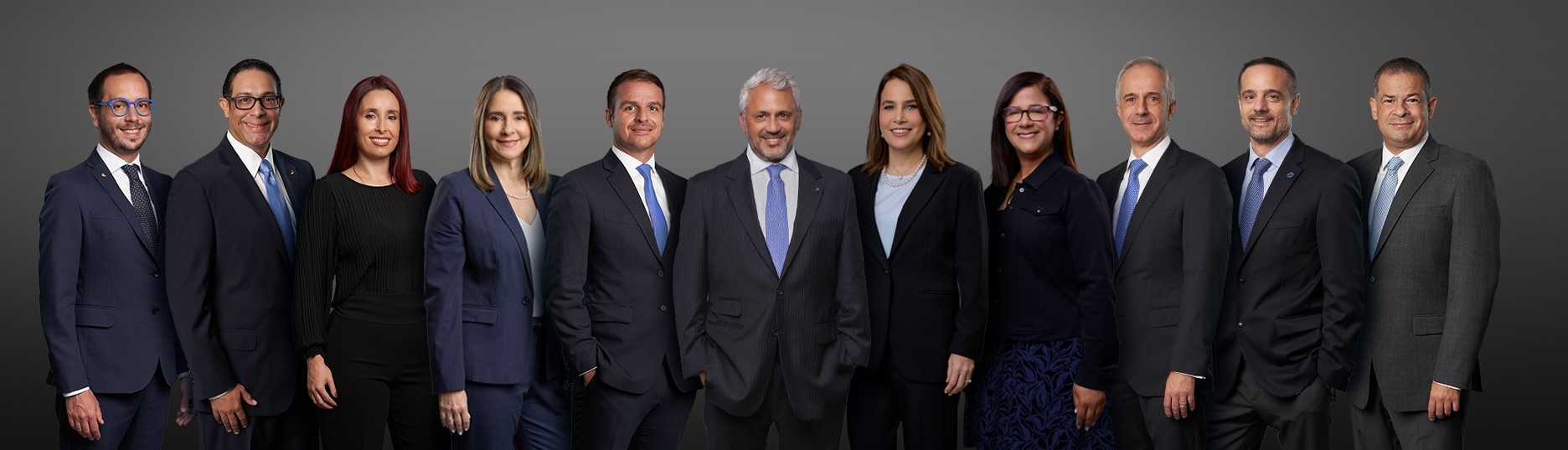
The Bladex Executive Committee is a permanent committee of the Bank's Management. The main objective of the Executive Committee is to direct and carry out the administrative management of the Bank, based on the delegation of powers by the Board of Directors regarding the approval of operating expenses, investments and human resources.
JORGE L. SALAS TAUREL
Chief Executive Officer
SAMUEL CANINEU
Executive Vice President
Commercial Banking
ANNETTE VAN HOORDE DE SOLIS
Executive Vice President
Chief Financial Officer
EDUARDO VIVONE
Executive Vice President
Treasury and Capital Markets
ALEJANDRO TIZZONI
Executive Vice President
Chief Risk Officer
JORGE LUIS REAL
Executive Vice President
Chief Legal Officer and Corporate Secretary
ADRIANA LIZZETH DÍAZ FORERO
Executive Vice President
Chief Audit Officer
OLAZHIR LEDEZMA
Executive Vice President
Strategic Planning
CARLOS DANIEL RAAD BAENE
Executive Vice President
Chief Investor Relations Officer
TATIANA CALZADA
Executive Vice President
Chief Compliance Officer
GERALDINE FRANCIS ABREU CUMARÍN
Executive Vice President
Technology & Operations (Chief Technology Officer)
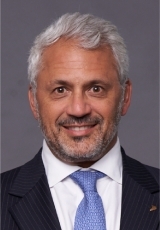
JORGE L. SALAS TAUREL
Chief Executive OfficerJorge L. Salas Taurel is the Chief Executive Officer of the Bank since March 9, 2020. Previously Mr. Salas was President and Chief Executive Officer of Banesco USA, Coral Gables, Florida, United States from 2014 to 2020 and in various capacities in Banesco since 2000, including General Manager of Banesco, S.A., Panama from 2008 to 2014, Founder and General Manager of Banesco -Todo Ticket- Venezuela from 2005 to 2008, and Vice President-Corporate Banking from 2000 to 2005. Previously, Mr. Salas has served as Head of Oil and Gas Corporate Banking Division at Corpbanca, Venezuela from 1998 to 1999.
Mr. Salas holds a Degree in Business Administration (Banking and Finance) from Universidad Metropolitana, Venezuela, a Diploma for Specialization in Economics from the University of Colorado and Masters in Public Policy and in Business Administration from the University of Chicago.
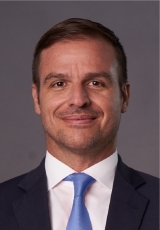
SAMUEL CANINEU
Executive Vice President - Commercial BankingSamuel Canineu was appointed Executive Vice President – Commercial Banking in August 2021. From 2020 to 2021, he served as Chief Country Officer in Greensill, Sao Paulo, Brazil. From 2003 to 2020, he held various positions at ING Group in the Americas, including VP of Leverage Finance (New York), Head of Loan Syndications Latin America (New York), and CEO of ING Brazil.
Mr. Canineu holds a Bachelor´s Degree in Business Administration from Fundacao Getulio Vargas in Brazil and a Master’s Degree in Business Administration from Columbia University.
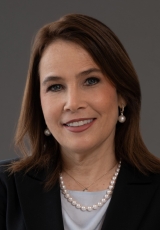
ANNETTE VAN HOORDE DE SOLIS
Executive Vice President - Chief Financial OfficerAnnette van Hoorde de Solis has served as Executive Vice President - Chief Financial Officer (CFO) since April 2025. She joined the company in 2005 as a Project Manager and has served 19 years in various capacities, mostly within the Treasury and Capital Markets area. Her most recent roles was Senior Vice Presient II - Funding and Asset and Liability Management.
Ms. Solis holds a Bachelor's degree in Industrial and Sustems Engineering form Virginia Polytechnic Institute and State University (USA).
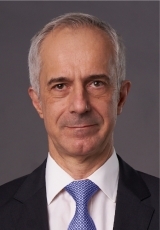
EDUARDO VIVONE
Executive Vice President - Treasury and Capital MarketsEduardo Vivone was appointed Executive Vice President, Treasury and Capital Markets, in February 2018, and has served as Senior Vice President, Head of Treasury, since September 2013. He also served as Senior Vice President, Funding, from April through August 2013.
Before joining the Bank, he served as Head of Global Markets for HSBC Bank Panama from 2010 to 2012, Regional Sector Head, Government Sector – Global Banking, Americas for HSBC Securities, New York from 2007 to 2010, Head of Treasury for HSBC Bank, Spain from 2003 to 2007, Head of Balance Sheet Management and Forward Foreign Exchange for HSBC Bank, Argentina from 1998 to 2003, and he served diverse Relationship Management capacities for Banco Roberts, Buenos Aires from 1990 to 1997, being the last two years as Head of Treasury Planning.
Mr. Vivone is a Certified Public Accountant and holds a Master's degree in Finance from the University of CEMA, Buenos Aires, Argentina, and a Bachelor´s degree in Accounting from University of Buenos Aires, Argentina.
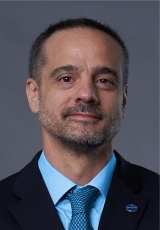
ALEJANDRO TIZZONI
Executive Vice President - Chief Risk OfficerAlejandro Tizzoni has served as Executive Vice President – Chief Risk Officer since April 2016. He previously served as Senior Vice President of Risk Management, and also held other positions within Bladex's Risk Department over the past ten years. Mr. Tizzoni previously served for nine years in different roles in the credit risk area in banking and the international private sector in Argentina.
Mr. Tizzoni holds a Master's Degree in Risk Management from the NYU Stern School of Business, an MBA from the University of Louisville, and a Bachelor's Degree in Business Administration and Certified Public Accountant, both from the University of Buenos Aires.
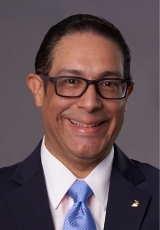
JORGE LUIS REAL
Executive Vice President - Chief Legal Officer and Corporate SecretaryJorge Luis Real serves as Executive Vice President - Chief Legal Officer and Corporate Secretary. He joined Bladex as Vice President, Head of Legal Risk in 2014, was appointed Secretary of the Board of Directors in April 2016 and in December of the same year, was promoted to Senior Vice President, Chief Legal Officer of the Bank.
Before joining the Bank, he served as Coordinator of Latin American Legal Affairs at BNP Paribas New York from 2010 to 2014, Head of Legal Department at BNP Paribas Panama from 2005 to 2010. Previously, he was the Head of Legal Department at Panama Group of BBVA from 2000 to 2005, and Lawyer at Mauad & Mauad Panama in 2000.
Mr. Real holds a Master’s degree in Commercial Law from Université de Paris II - Panthéon-Assas, a Law and Political Science degree from Universidad Santa María la Antigua and was admitted to practice law in Panama by the Supreme Court of Justice of Panama in 1998.

ADRIANA LIZZETH DÍAZ FORERO
Executive Vice President - Chief Audit OfficerAdriana Lizzeth Díaz Forero was appointed Executive Vice President, Chief Audit Officer in June 2021. Previously, Mrs. Díaz served as Vice President of Audit in Multibank Panama from 2020 to 2021. From 2012 to 2019, Mrs. Díaz held positions in Audit departments of several companies from Grupo Aval Colombia, among which Banco de Occidente and Fiduciaria de Occidente stand out. From 2002 to 2012, Mrs. Díaz held several management positions in Deloitte Colombia.
Mrs. Díaz is a Certified Public Accountant with a Degree in Accounting from Universidad La Gran Colombia, and holds a Master’s Degree in Business Administration and a Specialization in Financial Management, all from Universidad de Los Andes, Colombia.
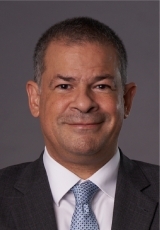
OLAZHIR LEDEZMA
Executive Vice President - Strategic PlanningOlazhir Ledezma was appointed Executive Vice President – Strategic Planning in July 2021. From 2014 to 2021, he served as Director in Partners in Performance, where he drove the efficiency and operational transformation of complex organizations. Previously, he was Vice President – Commercial Planning in Belcorp, Lima, Peru, from 2012 to 2014. Before this experience, he was Partner in McKinsey & Co. for 14 years, and Brand Manager in Heinz from 1994 to 1996.
Mr. Ledezma graduated as Mechanical Engineer from Simon Bolivar University in Caracas, Venezuela, and holds two Master’s Degrees, one in Business Administration (MBA) and another in Manufacturing Engineering, from the University of Michigan (USA).
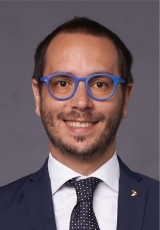
CARLOS DANIEL RAAD BAENE
Executive Vice President - Chief Investor Relations OfficerCarlos Daniel Raad Baene was appointed Executive Vice President, Chief Investor Relations Officer in June 2022. Previously, he developed his career at Bancolombia where he held various positions starting as Senior Trader from 2005 to 2014, Manager of Structured Operations from 2014 to 2020, and his most recent position was Director of Investor Relations (IRO) from 2020 to 2022.
Mr. Raad holds a degree in Industrial Engineering with a Master's Degree in Business Administration, both from Universidad de Los Andes, Colombia; and graduated from the International MBA Exchange Program at IE Business School, Madrid, Spain.
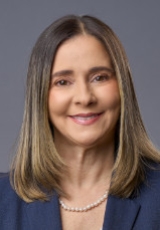
TATIANA CALZADA
Executive Vice President - Chief Compliance OfficerTatiana Calzada has served as Executive Vice President, Chief Compliance Officer since December 2023. Before joining the Bank, she served in Citibank, N.A. (Panama Branch) as Director- Anti Money Laundering Cluster Head for Caribbean and Central America from January 2023 to December 2023, Senior Vice-President Anti Money Laundering Cluster Head for Caribbean and Central America from 2021 to 2023, Senior Vice-President Panama Anti Money Laundering Head and Central America Anti Money Laundering Cluster Head from 2018 to 2021, Senior Vice- President Anti Money Laundering Compliance Risk Management Latin America Financial Institutions Head and Anti Money Laundering Caribbean Cluster Head from 2016 to 2018, Senior Vice- President Panama Country Compliance Head from 2012 to 2016. Prior to serving in Citibank, Mrs. Calzada served as Chief Legal Counsel for the Bank from 1997 to 2012 and Lawyer at Patton, Moreno & Asvat in Panama from 1995 to 1996.
Ms. Calzada has a Law and Political Science degree from Universidad Católica Santa María La Antigua in Panama, and a Master’s Degree in International Law, Trade, and Finance from Tulane University. She was admitted to practice law in Panama by the Panamanian Supreme Court of Justice in 1994. Mrs. Calzada is also a Certified Professional in Anti Money Laundering (CPAML) by the Financial and International Business Association (FIBA), certified by the Florida International University since 2013, and is a Certified Public Translator (Spanish-English and vice versa) in Panama since 1992.
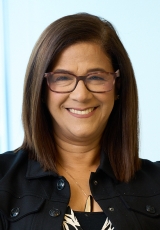
GERALDINE FRANCIS ABREU CUMARÍN
Executive Vice President – Technology & Operations (Chief Technology Officer)Geraldine Francis Abreu Cumarín was appointed as Executive Vice President, Technology & Operations (Chief Technology Officer) in September 2024, after a career of more than 25 years leading technological transformations in various companies in Latin American financial sector, with a recognized track record as a senior IT executive at Banesco, Credicard Consortium, Banco Plaza in Venezuela and Iuvity, where she contributed to the implementation of high-impact initiatives for important financial institutions in Colombia, including Davivienda, Bancolombia and HelmBank in the United States. Additionally, Ms. Abreu has extensive experience in Digital Channels, Payment Methods, as well as in the Management of Highly Complex Projects.
Ownership Composition
This shareholding structure gives Bladex greater strength and flexibility to accomplish its mission through a proven mechanism for the promotion and financing of Latin American trade.
As of June 30, 2026, there were 37,589,918.88 issued and outstanding common shares.
Legal Structure
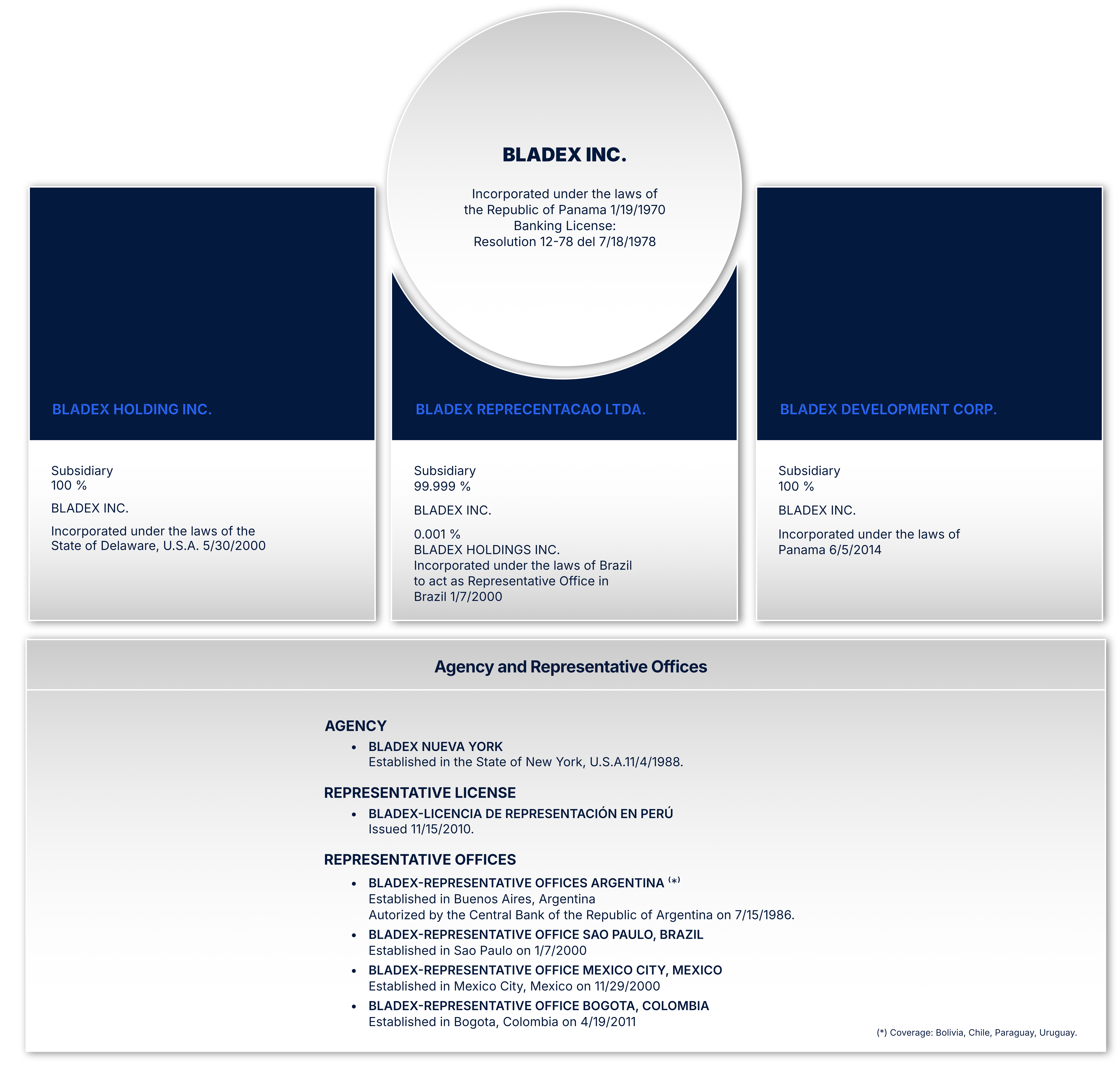
.
Operational Risk

Definition
Operational Risk is the possibility of incurring losses due to deficiencies, failures or inadequacies of the human resource, of the processes, of the technology, of the infrastructure, of management information, of the models used, or due to the occurrence of external events. This definition includes the legal risk associated with such factors; but excludes losses from loss of profit, reputational risk and strategic risk.
The main objectives of Operational Risk include at least:
-
Identify and mitigate the risks to which the bank is exposed, regardless of the existence of losses, developing a series of controls to mitigate these risks within the framework of internal controls.
-
Promote a culture of risk awareness through a complete training program available to all employees.
-
Follow best practices to measure and evaluate operational risks in an objective manner, complying with the standards established by the Superintendence of Banks of Panama, guidelines recommended by the Basel Committee and regulators of the different jurisdictions in which the Bank operates.
-
Monitor risk exposures and ensure that they remain within the limits approved by the Board of Directors.
Operational Risk Management
In Bladex, Operational Risk Management is carried out through various tasks and activities seeking to reinforce our main non-financial and operational risks and in strict compliance with the guidelines of international and local regulations under the Operational Risk and Integral Risk Management.
We have defined and formalized the methodology for the management of Operational Risk according to its stages (identification, measurement, mitigation, monitoring, control and information) through:
-
Operational Risk Policy and Manual and Event and Incident Guidelines
-
Global limit and specific operational risk limits
-
Operational Risk Indicators
-
Tool for event and incident management
-
Operational Risk Matrices
-
Operational Risk Database
For the correct implementation for Operational Risk Management effective, coordination between Risk Managers is required Operational (First Line of Defense), and the Operational Risk Unit (Second Line of Defense).
In Bladex we designate Operational Risk Managers in the different areas of the Banks, with the following responsibilities:
-
Act as the liaison between the areas and the Operational Risk Unit
-
Provide the information by recording the events and incidents in the database
-
Development of the process map of your area, identifying the key risks of your processes, evaluating existing controls and proposing action plans.
-
Keep your Vice Presidency timely and continuously informed about the previously identified critical risks, about the report of events and incidents of Operational Risk and about the Risk Map
-
Report findings with medium and high risk resulting from its Internal Audit Report, that are related to Operational Risk or that have produced losses to the Bank
Accomplishment
To strengthen the management of Operational Risk in Bladex and comply with regulatory provisions, we have worked to raise awareness among employees about the importance of the Risk Framework through the following mechanisms:
-
Informational capsules
-
Inductions, Seminars and Sessions of Know Your Bladex
-
Awareness of the reporting of events and incidents of Operational Risk
-
Definition of Operational Risk Managers and their responsibilities
-
Follow-up on action plans for events and incidents
-
Monitoring of the Operational Risk account and its records
-
Inform the Risk Policy and Assessment Committee of the events and incidents reported and the evolution of annual losses
Fraud Risk

Definition
Fraud Risk refers to the possibility of financial losses resulting from fraudulent activities carried out by internal or external actors. These activities may involve process manipulation, weaknesses in internal controls, abuse of trust, or unauthorized use of the Bank's assets and resources. This category of risk encompasses internal and external fraud, cyberattacks, and the misuse of confidential information.
Objectives of Fraud Risk Management
Fraud Risk Management aims to:
-
Identify, prevent, and mitigate fraud risks through the implementation of strong internal controls and advanced technological tools.
-
Promote an organizational culture based on ethics, transparency, and zero tolerance for fraud through awareness and training programs.
-
Establish a monitoring and early warning system that proactively detects suspicious activities, ensuring compliance with regulations set forth by the Superintendency of Banks of Panama and international standards such as Basel, COSO, and SOX.
-
Implement effective mechanisms for reporting and tracking fraudulent activities, strengthening internal and external whistleblowing channels.
Approach to Fraud Risk Management
At Bladex, Fraud Risk Management is structured around the identification, assessment, mitigation, monitoring, and control of such risks. To this end, the Bank has adopted the principles set forth by COSO 2013 and the Fraud Risk Management Guide, which include:
-
Integrating fraud risk management into Corporate Governance, ensuring that control policies and procedures align with the Bank’s strategic objectives.
-
EConducting thorough fraud risk assessments, identifying vulnerable areas, and establishing corrective measures.
-
Developing preventive and detective control activities, ensuring the reduction of potential risks.
-
Defining and utilizing key risk indicators, allowing for fraud risk assessment and prevention.
-
Establishing fraud reporting and response processes, including investigation protocols and security gap corrections.
-
Continuously monitoring the effectiveness of the fraud risk management framework, focusing on continuous improvement.
To ensure the proper implementation of this strategy, a three-line defense model is applied:
-
First Line of Defense: Business units and employees responsible for applying and maintaining established controls.
-
Second Line of Defense: The Fraud Risk Management Unit, responsible for overseeing and optimizing prevention and detection processes.
-
Third Line of Defense: Internal Audit, which independently evaluates the effectiveness of risk management and recommends necessary adjustments.
Implemented Actions and Achievements
To strengthen fraud prevention and ensure regulatory compliance, Bladex has developed multiple initiatives:
-
Specialized training programs, aimed at enhancing employee awareness and knowledge of fraud risks.
-
Execution of strategic projects, focused on identifying and reinforcing internal fraud risk management controls.
-
Creation of the Fraud Risk Management and Corporate Insurance Manager role, to lead and coordinate efforts in this area.
-
Establishment of an evaluation committee, responsible for analyzing and handling fraud reports.
-
Updating and strengthening the Fraud Risk Management Policy, incorporating an approach focused on operational security and establishing a clear process for reporting and assessing incidents through the Bank’s Ethics Line.
With these measures, Bladex reaffirms its commitment to transparency, security, and the protection of the interests of its clients, employees, and stakeholders.
Relevant Documents
Our Corporate Governance structure is the key component of the way we manage the Organization and enables us to ensure strict compliance with the rules and regulations of the different regulatory authorities Bladex reports to.